

Key Points:
- A high pH doesn't just feel uncomfortable - it actively makes your chlorine less effective, even if your chlorine reading looks perfectly normal on its own.
- Cyanuric acid has a "Goldilocks" effect: some is essential to stop chlorine breaking down in sunlight, but too much makes chlorine less effective - more isn't better.
- Where you take your water sample matters - testing from the surface or pool edges instead of elbow-deep can throw off your results entirely.
- Calcium hardness cuts both ways: too low causes etching and corrosion, too high causes scaling - the "safe zone" is narrower than most pool owners assume.
- Digital photometers remove human error from the equation entirely, using built-in calibration to deliver lab-grade accuracy instead of relying on judging colour changes by eye.
Featured Question
"How do I test my pool water accurately and keep it properly balanced?"
- Peter from Ashburton Victoria
A big thank you to Peter from Ashburton for submitting this question. Peter wanted to know more about accurate pool testing and how to keep water properly balanced - a topic that trips up even experienced pool owners, so it's a great one to dig into properly. Got a pool question of your own? Send it in and we might cover it next… https://www.aquatune.net.au/pages/diy
Why Accurate Pool Testing Matters
Owning a pool is more than a summer past time - it's an ongoing commitment to safety and enjoyment, and testing is where that commitment starts. Without it, you're guessing at what's happening in your water, and that guesswork tends to end in algae blooms, cloudy water, or worse.
Here's what consistent, accurate testing actually protects:
- Swimmer Safety - keeps harmful bacteria and algae from taking hold.
- Your Equipment And Surfaces - imbalanced water is corrosive and can quietly wreck pumps, heaters and pool finishes over time.
- Water Clarity - cloudy or discoloured water is almost always a sign of a chemical imbalance, not a random occurrence.
- Comfort - balanced water means no stinging eyes or itchy skin.
- Your Wallet - catching an issue early with a two-minute test is always cheaper than fixing algae or equipment damage later.

The Key Parameters To Track
Five numbers do most of the work in pool chemistry:
| Parameter | Ideal Range | Why It Matters |
| pH | 7.2–7.8 | Balances comfort and equipment protection; too low corrodes, too high causes scaling. |
| Chlorine | 1–3 ppm | Sanitises the water and keeps bacteria and algae at bay. |
| Total Alkalinity | 80–120 ppm | Buffers pH so it doesn't swing wildly. |
| Calcium hardness | 200–400 ppm | Prevents etching (too low) and scaling (too high) on surfaces and equipment. |
| Cyanuric Acid | 30–50 ppm | Shields chlorine from breaking down in sunlight. |
A quick rundown of each:
- pH is the foundation of pool chemistry - how acidic or basic your water is. Outside the 7.2–7.8 range, you'll either corrode surfaces (low pH) or cause scaling (high pH), and either way, swimmers will feel it in their skin and eyes. Adjust gradually with acids or alkalis rather than making sudden changes.
- Chlorine is your primary sanitiser. Too little and bacteria or algae get a foothold; too much and it irritates skin and eyes. Sunlight breaks it down over time, which is where cyanuric acid comes in.
- Total alkalinity acts as a buffer for pH. Low alkalinity means your pH will swing around unpredictably; high alkalinity can cause cloudiness. Adjust slowly with bicarbonate of soda (Sodium Bicarbonate) or a commercial buffer product.
- Calcium hardness protects your pool's surfaces and equipment. Too low and you risk etching and corrosion; too high and you get scaling. Calcium chloride raises it; dilution lowers it.
- Cyanuric acid stabilises chlorine against UV degradation. Too much, though, and your chlorine becomes less effective - so it's a "some is essential, more isn't better" parameter.
Other factors worth an occasional check include metals and nitrates, which can cause staining or feed algae growth even when your core numbers look fine.
Choosing A Testing Method
-
Test Strips - A good quality test strip means you can dip and read in seconds. Fast and easy, best for routine daily or weekly checks. Although less precise than other methods, more than sufficient for the home user.
-
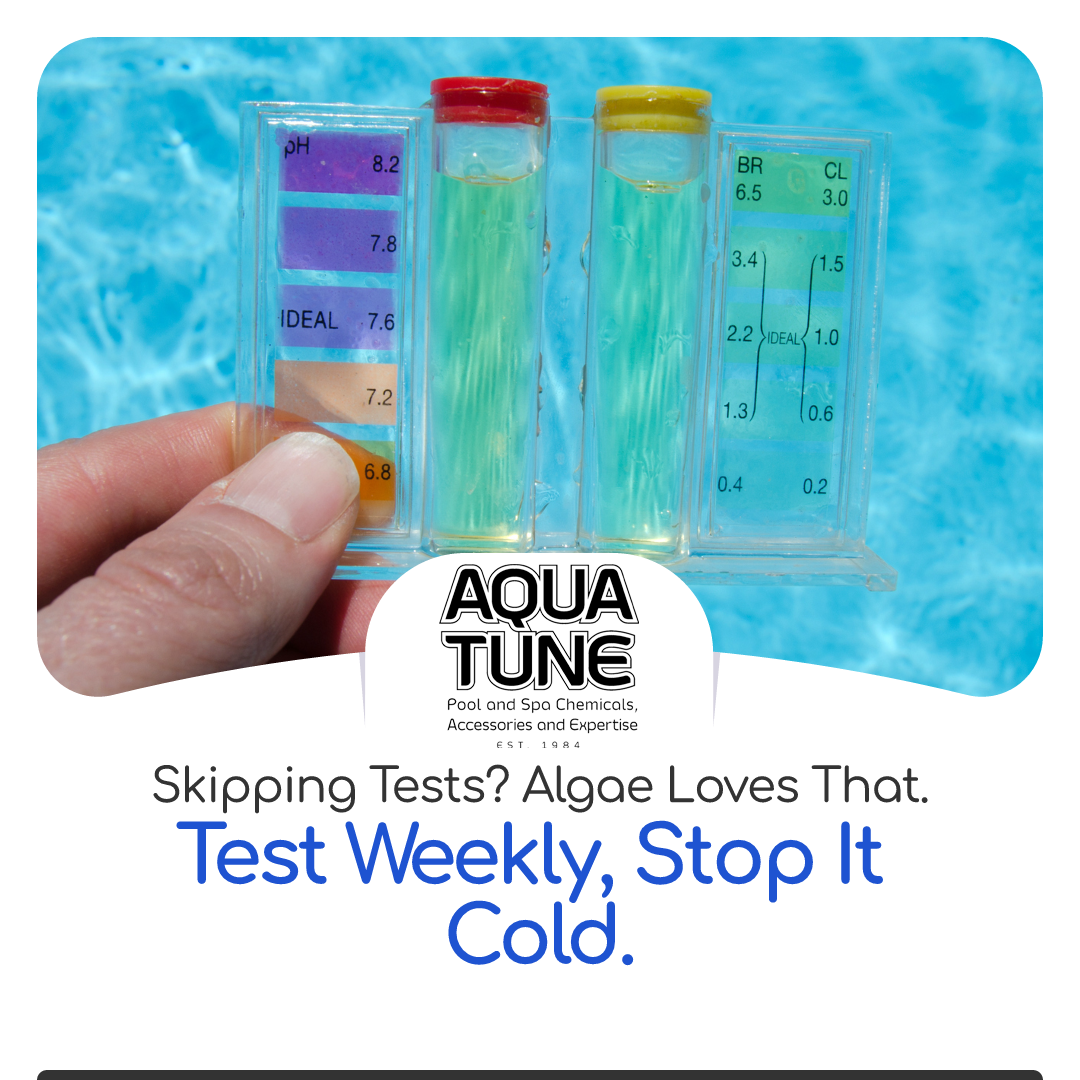
Liquid Reagent Test Kits - A common method. Takes a little more time and care, but can be subject to variances in reagent quality and user error.
-
Digital Testers / Photometers - for the pool technicians or commercial users. While still a poolside test, regular calibration needed and less human error present. Most commonly used by Pool techs, Pool shops, Commercial operators and local health officials.
Taking A Proper Sample
Good results start with a good sample:
- Use a clean container - anything else risks contamination.
- Collect from elbow-deep in the pool near the skimmer box, not the surface or the edges.
- Test as soon as possible after collection.
- Label the sample if it's going to a pool shop or professional for analysis.
How Often To Test
-
Weekly under normal conditions.
-
More often during heavy pool use, hot weather, or after rain and storms.
- Immediately if you notice cloudiness, odour or a change in how the water feels.
Interpreting Results And Keeping Everything Balanced
The parameters don't work in isolation - they interact:
- A high pH reduces how effective your chlorine is, even if your chlorine reading looks fine on its own.
- Alkalinity needs to be in range for pH to actually hold steady.
- Calcium hardness needs adjusting based on your results to avoid long-term surface damage.
Balancing your pool is about applying these results together, not just chasing one number in isolation.
Troubleshooting Common Issues
-
Algae Growth → usually low chlorine; increase sanitiser and retest. May need an algaecide treatment.
-
Cloudy Water → check pH and alkalinity first; correct and clarity should follow - tablet and liquid clarifiers can rapidly help the process.
- Staining → often high metal content; test for metals and treat accordingly.
Catching these early, through routine testing, is what keeps small issues from becoming expensive ones.
Keep A Simple Log
Recording your results over time turns individual tests into useful trends. Track:
- Date and time of testing.
- Results for each parameter.
- Any adjustments made afterward.
A simple log makes it much easier to catch slow drifts before they become real problems, and it's invaluable if you ever need to bring in a professional.
When To Call In A Professional
Some situations are worth outsourcing:
- Persistent cloudy water that won't clear despite correct-looking readings.
- Chemical imbalances you can't resolve after a few adjustment cycles.
- Equipment that isn't performing as it should.
A professional eye can save hours of trial and error and often money in the long run.
Recommended Testing Products From AquaTune
When you're in between visits to the pool shop and want to keep your pool in check, we recommend a quality test strip (Made in America):
-
InstaTest 3in1 / 4in1 Test Strips - the quickest way to keep tabs on your core levels between more thorough tests… https://www.aquatune.net.au/collections/test-strips
The Bottom Line
Consistent, accurate testing is the single biggest factor in keeping a pool safe, clear and comfortable to swim in. Get into a regular rhythm with it, keep a log and you'll extend the life of your pool and its equipment while keeping every swimmer happy.
Thanks again to Peter from Ashburton for a great question - keep them coming!
The AquaTune Team
P.S. Do you have a question about your pool and or spa? Share it with us here and as a small token of our appreciation we will also send you a discount code for $10 off your next order over $75 (which includes free delivery)... https://www.aquatune.net.au/pages/quick-favour
P.P.S. Do you look after your pool or spa yourself? Join our Do-It-Yourself Pool and Spa Maintenance community here… https://www.aquatune.net.au/pages/diy